A few years back, I set an alarm for 6:45 a.m. just to stand in my backyard and watch the sun come up on what my weather app called "the first day of spring." My neighbor saw me out there in a jacket, coffee in hand, staring at the horizon like I was waiting for a bus, and asked what on earth I was doing.
I told him I was watching the equinox happen. He laughed and said, "Isn't that just a date on the calendar?"
Fair question. And for years, that's all it was to me too — a little label that showed up on Google when I searched "when does spring start." I never actually understood what was happening up there, or why it mattered beyond marking the change of seasons.
Once I actually dug into it (and started tracking it every year out of curiosity), it turned into one of those small things that quietly changed how I notice the world. So let's break it down the way I wish someone had explained it to me.
(If you're the type who likes watching the calendar count down, howmanydaysuntilspring.com is a nice little tool for that — I've had it bookmarked for a couple of years now.)
So What Actually Is the Spring Equinox?
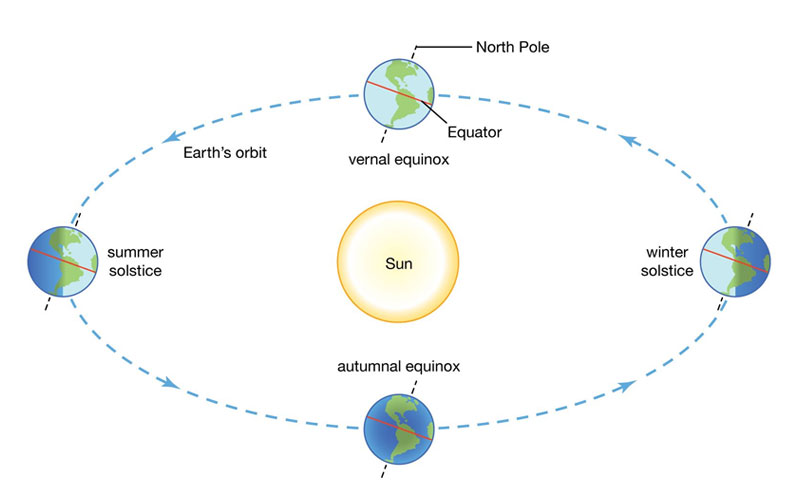
Here's the simple version: the spring equinox is the moment when the sun crosses directly over the Earth's equator, and day and night end up almost exactly equal in length — roughly 12 hours each, everywhere on the planet.
It happens because of the tilt of the Earth. Our planet is tipped at about 23.5 degrees, and for most of the year that tilt means one hemisphere gets more direct sunlight than the other. But twice a year, the tilt lines up in a way that neither hemisphere is leaning toward or away from the sun. That's an equinox. The word itself comes from Latin — "equi" for equal, "nox" for night.
In the Northern Hemisphere, this spring version usually falls around March 19–21. In the Southern Hemisphere, that same moment marks the start of autumn, not spring — which honestly confused me for way longer than I'd like to admit.
Wait, the Date Actually Moves?
Yeah, this was the part that surprised me the most. I always assumed March 20 was set in stone, like a national holiday. It's not.
Because our calendar year (365 days) doesn't perfectly match the Earth's actual orbit around the sun (365.25-ish days), the exact timing shifts a little each year. Sometimes it lands on the 19th, sometimes the 20th, occasionally the 21st.
I actually got called out on this once. I posted something on a family group chat saying "Happy first day of spring!" on March 21st, and my uncle — a retired science teacher who loves being technically correct — replied with the exact time the equinox had occurred the day before. Down to the minute. That was a fun lesson in checking a proper source instead of just assuming.
If you want the exact time for your location, timeanddate.com is genuinely the easiest tool for this. You just search "equinox" and it adjusts to your time zone automatically. I've used it every March for the last few years and it's never let me down.
Why It's More Than Just a Date on a Calendar
Once you know what's happening astronomically, it's easy to see why cultures throughout history built entire celebrations around this moment.
Nowruz (Persian New Year) is timed to the spring equinox and celebrated by millions of people across Iran, Afghanistan, and Central Asia. It's just one of several dates worth knowing about — I put together a rundown of other spring holidays if you want the fuller list.
Ostara, a pagan festival tied to fertility and renewal, lines up with the equinox too — and yes, this is where a lot of "spring = rebirth" imagery, including eggs and rabbits, actually traces back to.
Ancient sites like Chichen Itza in Mexico and Stonehenge in England were literally built with the equinox in mind. At Chichen Itza, the setting sun creates a shadow that looks like a serpent slithering down the pyramid steps — people travel from all over just to see it in person.
I watched a livestream of the Chichen Itza shadow event one year while eating breakfast, and it genuinely gave me chills. People had lined up for hours to witness something that's essentially just light and geometry — but it didn't feel small at all.
What It Actually Means for Everyday Life
Okay, beyond the ancient history and mythology, here's where it gets practical.
1. Daylight actually starts stretching out fast after this point. This is the part I notice most. After the equinox, days in the Northern Hemisphere get noticeably longer, noticeably fast. It's not subtle. By late April, I'm getting home from work while it's still bright outside, which sounds small until you've spent months commuting in the dark.
2. It's a decent trigger for seasonal habits. I use it as my personal cue to swap out my closet, deep clean the house, and check my garden beds. Nothing forces you to actually do "spring cleaning" like a date that reminds you spring is officially here.
3. Gardeners genuinely use it as a planting marker. If you grow anything — tomatoes, herbs, flowers — the equinox is a rough signal that frost risk is dropping (though not gone, depending on where you live). I made the mistake one year of planting basil seedlings the week of the equinox in a zone that still gets frost into early April. Lost half the batch to a cold snap. Lesson learned: use the equinox as a general "spring is coming" marker, not a hard planting deadline. Check your local frost date instead — the Old Farmer's Almanac website has a frost date tool by zip code that's actually pretty reliable. I've also put together a more detailed set of spring gardening tips based on the mistakes I made that first year, if you want to skip the learning curve.
4. It affects mood more than people expect. This isn't pseudoscience — increased daylight genuinely affects serotonin and circadian rhythm. A lot of people notice a real shift in energy and motivation right around this time. If you've ever felt oddly optimistic in late March for no clear reason, that's probably part of why.
That extra motivation is worth putting somewhere. I keep a running list of spring activities for exactly this — it's basically my go-to whenever the weather turns and I don't want to waste the good energy sitting inside. And if you're actually planning a trip once things warm up, it's worth checking specifics before you go — I looked up what time it is in Colorado Springs right now before a work call once and it saved me from showing up an hour off, and I did the same digging when I was putting together a list of what to do in Palm Springs for a spring trip a couple of years ago.
A Simple Way to Actually Experience It (Not Just Read About It)
If you want to make this more than a fact you scroll past, here's what worked for me:
Look up the exact equinox time for your city using timeanddate.com.
Step outside around sunrise or sunset that day. You genuinely can notice the sun rising/setting closer to due east or due west than any other time of year.
Track sunrise and sunset times for a week before and after. Most weather apps show this. Watching the daylight minutes climb day by day makes the whole thing feel real instead of abstract.
Start one small seasonal habit tied to the date — cleaning, planting, journaling, whatever. It gives the date a purpose beyond a calendar notification.
Common Mistakes People Make
Assuming the date is fixed. It shifts by a day or two depending on the year — always double-check instead of guessing.
Mixing up hemispheres. If you're in Australia, South Africa, or anywhere south of the equator, this same event marks the start of autumn, not spring.
Treating it as a hard planting or weather rule. It's an astronomical event, not a guarantee that frost season is over. Always check local frost dates separately.
Thinking equal day and night means exactly 12:00:00 everywhere. It's close, but due to atmospheric refraction and how sunrise/sunset are technically measured, it's usually off by a few minutes depending on location.
Final Thoughts
I didn't expect a random astronomy fact to become something I look forward to every year, but it has. There's something kind of grounding about knowing exactly why the days are getting longer, and that people have been marking this same moment for thousands of years — building monuments around it, timing New Year celebrations to it, using it to decide when to plant food.
Next time March rolls around, don't just glance at the "first day of spring" headline and move on. Check the actual time, step outside, and notice it happening. It's a small thing, but it's one of those small things that makes the world feel a little more connected once you actually pay attention to it.